
Seeing Continuity: How Visual Documentation Shapes the Life of Historic Places
Historic places can often appear as anchors. Those unyielding, fixed monuments in time that ground and stabilize cultural memory. Preservation discourse reinforces this image by emphasizing their material endurance through protected origins and conserved artifacts. Yet anyone who has worked inside these institutions knows that they are anything but static. Historic sites are active organizations, shaped daily by curatorial decisions, interpretive frameworks, staffing structures, funding cycles, and shifting public values. More than in collections, their continuity resides in the ongoing work of deciding what a place means and how that meaning is conveyed.
That work is unevenly documented. Preservation archives excel at recording moments of origin and intervention - think original blueprints, restoration reports, acquisition files. While these materials are indispensable, they tend to privilege monumental events over the slower, less visible evolution of interpretation. What is often missing from the historical record is the present tense: how institutions understand themselves now, how narratives are being revised, and how continuity is actively produced rather than passively inherited.
This essay argues that visual documentation - notably photography and film - can function as a critical record of this interpretive present, and as a form of evidence that captures interpretation in motion. When practiced with rigor, visual documentation extends archival traditions by recording how historic places explain their own meaning in addition to the artifacts they preserve.
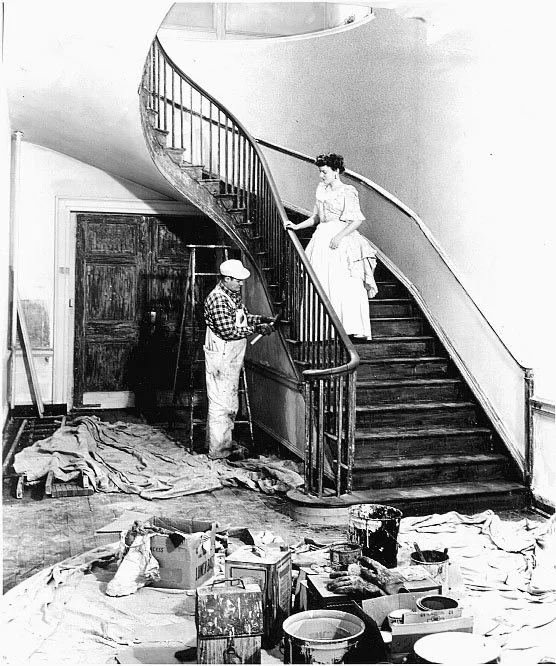
Woodlawn Mansion, Davis Studio Photography, c.1950s
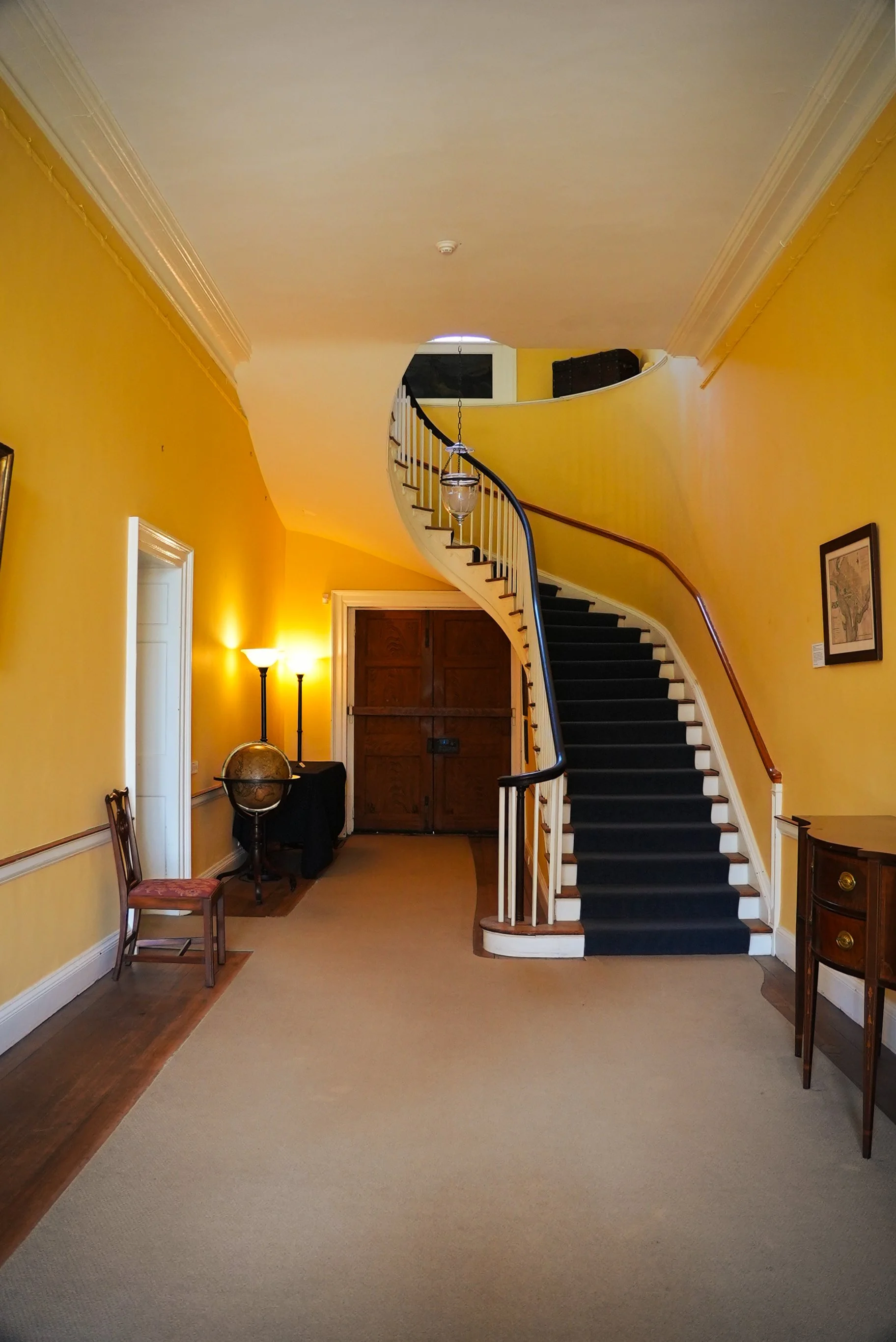
Woodlawn Mansion, Elena Tibbetts, 2024
Continuity Is an Active Practice
Preservation discourse often frames continuity as something inherited, like a legacy passed down intact through careful stewardship. In reality, continuity is continuously reasserted. Every label, guided tour, exhibition choice, and public program is an interpretive act that stabilizes some narratives while loosening others. These decisions are shaped by new scholarship, social pressure, organizational mission, and material constraint. Continuity, then, is not something historic sites possess; it is something they perform.
House museums offer a particularly revealing lens, where domestic scale fosters narrative coherence even as interpretive frameworks continuously shift with deepening historical insight. Over the past several decades, many have shifted from relying heavily on prominent occupants toward more expansive accounts that include labor and contested histories. These shifts rarely arrive fully formed. More often, they unfold gradually through experimental programming, revised tours, internal debate, and provisional language that tests how much change an institution can absorb.
These transitional moments are crucial. They reveal how institutions negotiate responsibility to the past while responding to the present. Yet they are precisely the moments least likely to be preserved. Written records may note decisions after the fact, but they rarely capture how interpretation was spatialized, spoken, or atmospherically experienced while it was still unsettled.
What Visual Documentation Can, and Cannot Do
Visual media can register interpretive change as it unfolds within space. Unlike traditional archival materials, film - arguably more so than photography - captures how meaning travels across time, noting how stories are sequenced, whose voices are amplified, and how institutional purpose is articulated through tone and pacing. In this sense, the camera records the priorities that shape interpretation itself.
Yet this capacity is far from neutral. Framing is selective, editing - interpretive; documentation can aestheticize institutional narratives or compress disagreement into coherence. These risks are real, and visual records should not be mistaken for transparency.
The aim is not to expose deliberation as it occurs, but rather to preserve moments of interpretive transition once decisions have been made. When institutions reflect on what obligations shape these evolutions and changes, they create a record of reasoning, a kind of reflection that captures institutional self-understanding at a particular moment in time.
In this way, visual documentation is neither publicity nor surveillance, but a deliberate addition to the archive: a situated account of how meaning was understood, negotiated, and defended.
Interpretation in Motion
Interpretation does not emerge fully formed. Rather, it is developed through structured reflection among leadership, curators, preservation staff, and trustees who weigh architecture, collections, labor histories, institutional mission, and contemporary responsibility against one another, holistically. These discussions shape how a site understands its obligations and how those obligations are ultimately expressed.
What reaches the public is typically a stabilized narrative in the form of a revised tour, or a reframed exhibition. And what often disappears from the record is the reasoning that led there. Yet that reasoning is itself part of the institution’s history, because it reveals how competing priorities were balanced, how evidence was evaluated, and how continuity was defined at a particular moment.
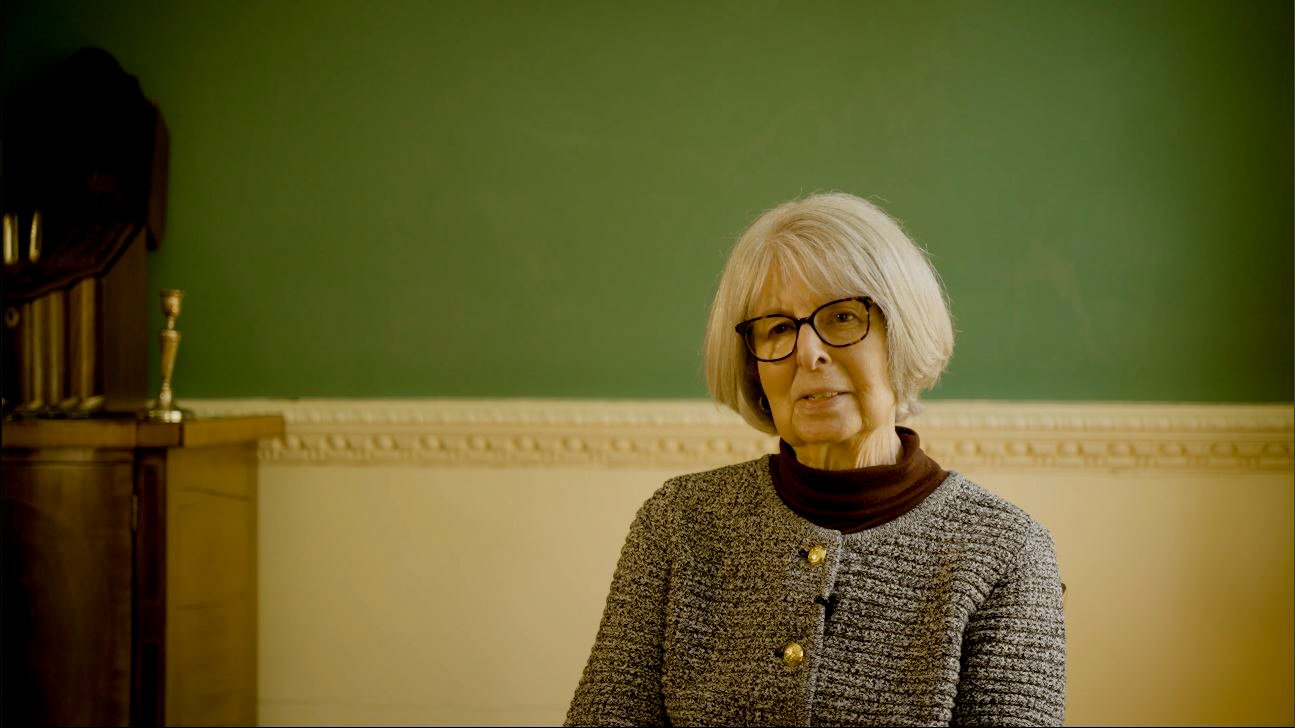
When institutions choose to document this articulated reflection, the record expands. The camera, situated within the very spaces under discussion, captures the final look of interpretation with the added layer of how it is explained and defended. Architecture and institutional voice converge, producing a situated account of interpretive logic, and answers the question of why certain narratives were emphasized, revised, or retired.
For future caretakers, such material offers more than outcome. It preserves the intellectual conditions under which meaning shifted, allowing continuity to be understood as a reasoned practice rather than a silent inheritance.
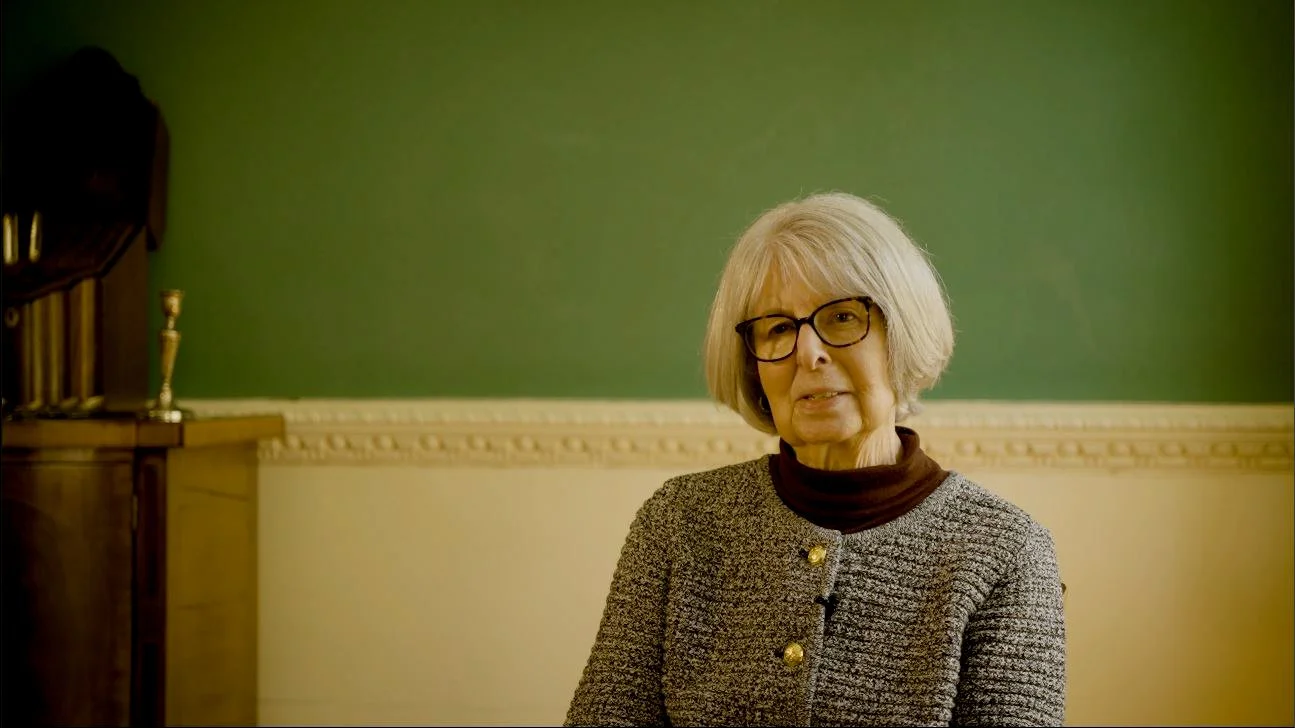
Hammond-Harwood House Film by DomoNaut, 2025
Institutional Power and the Limits of the Lens
Acknowledging the value of visual documentation requires equal attention to its limits. Institutions control access, framing, and ultimately circulation. What appears on camera may represent one slice of interpretation, while other voices and debates may remain off-screen. Documentation can inadvertently reinforce institutional authority by presenting interpretation as consensus rather than contestation.
These constraints do not invalidate visual records, but require they be read critically, like correspondence, minutes, or curatorial statements. As much as the word "documentary" signals neutrality, it is often not. Its value lies in revealing how institutions choose to present themselves at a given moment, including what remains unresolved or unsaid.
Seen this way, visual media does indeed complicate existing archives. It adds texture to the historical record by capturing interpretive labor as it occurs, while remaining legible as a situated, partial account.
Stewardship in the Present Tense
There is a persistent tendency to treat visual media as outward-facing, one that is useful for outreach, education, or fundraising, but secondary to preservation’s core work. This distinction is increasingly difficult to maintain, as interpretation is one of stewardship’s primary modes. How a site explains itself shapes how it is valued publicly, supported, and ultimately preserved.
When visual documentation is approached as part of this stewardship ecosystem, its significance accrues over time. As institutions evolve, staff turns over, and firsthand knowledge recedes, these records become evidence of how continuity was understood and articulated at earlier moments. They allow future scholars and practitioners to trace what changed, and how that change was met, whether it was resisted or embraced.
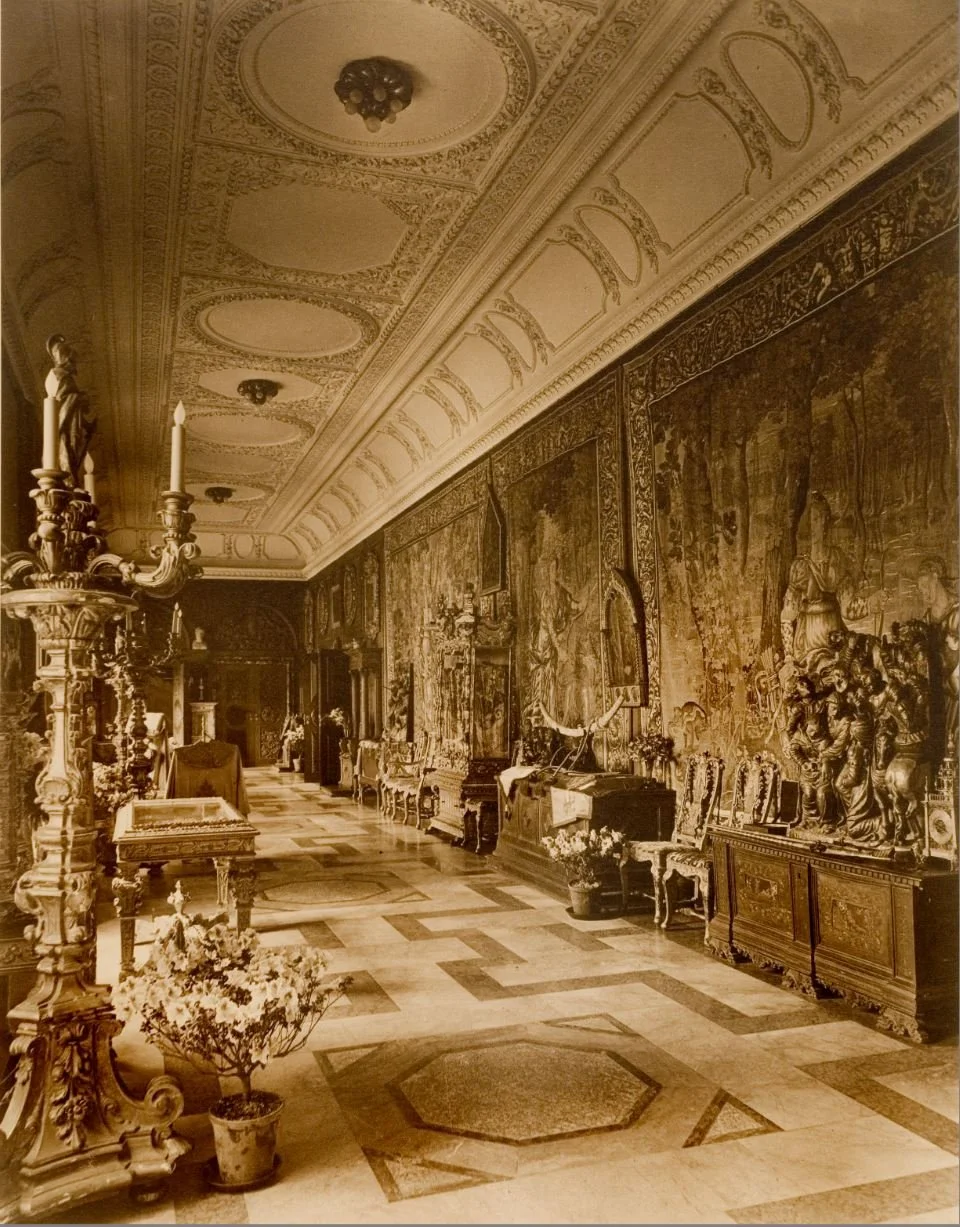
Olmstead Gallery, Anderson House, Francis B. Johnston, 1910
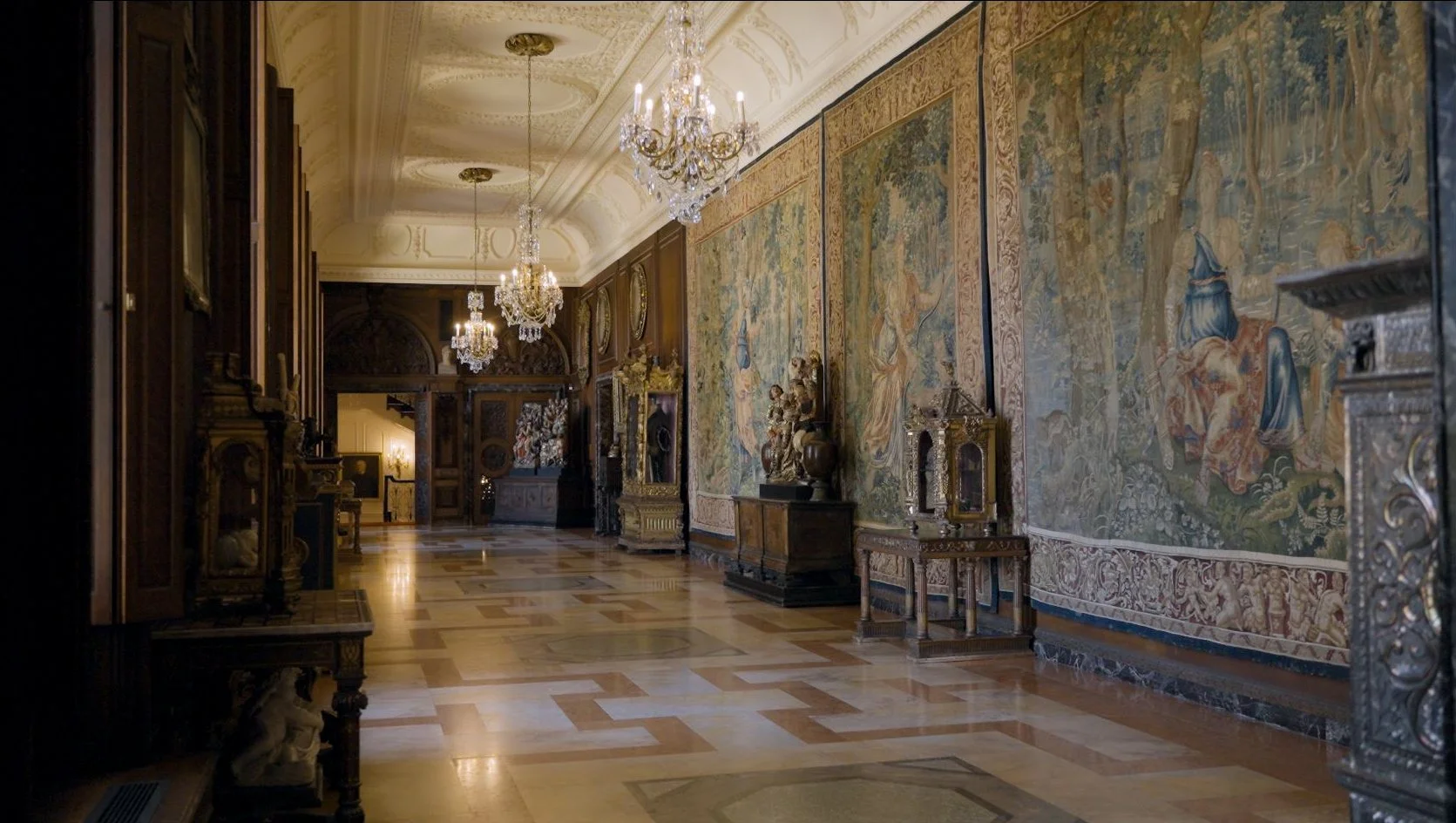
Olmstead Gallery, Anderson House, Film still by DomoNaut, 2025
Toward a More Complete Record
One of preservation’s persistent challenges is the unevenness of the historical record. Origins and outcomes are meticulously documented, yet the processes through which interpretation unfolds often vanish from view. Visual documentation seeks to redress this imbalance, capturing the interpretive present and tracing how histories are actively navigated within historic spaces.
This approach moves beyond nostalgia or novelty. It does not attempt to freeze meaning or impose finality; rather, it acknowledges that today’s interpretations themselves are artifacts of the moment. When recorded with care and critical awareness, these provisional instances enrich the archive, granting future scholars and audiences access not only to what was decided, but to how those decisions emerged.
To see continuity, then, is to witness preservation as it happens, and to recognize that the present, provisional and alive, as deserving its place alongside the past in the historical record.